vinayaka chavithi katha pdf

Vinayaka Chavithi Katha: A Comprehensive Plan
Numerous PDF resources detail the Vinayaka Katha, offering diverse narratives of Lord Ganesha’s origins and exploits.
These downloadable texts present varied versions of the tale,
enriching understanding of this significant Hindu celebration and its associated mythology.
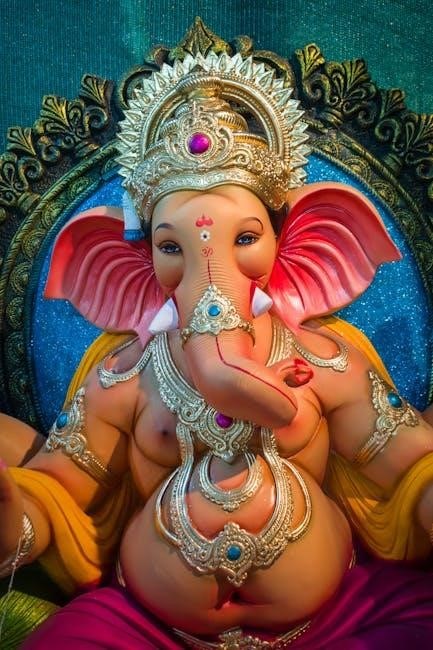
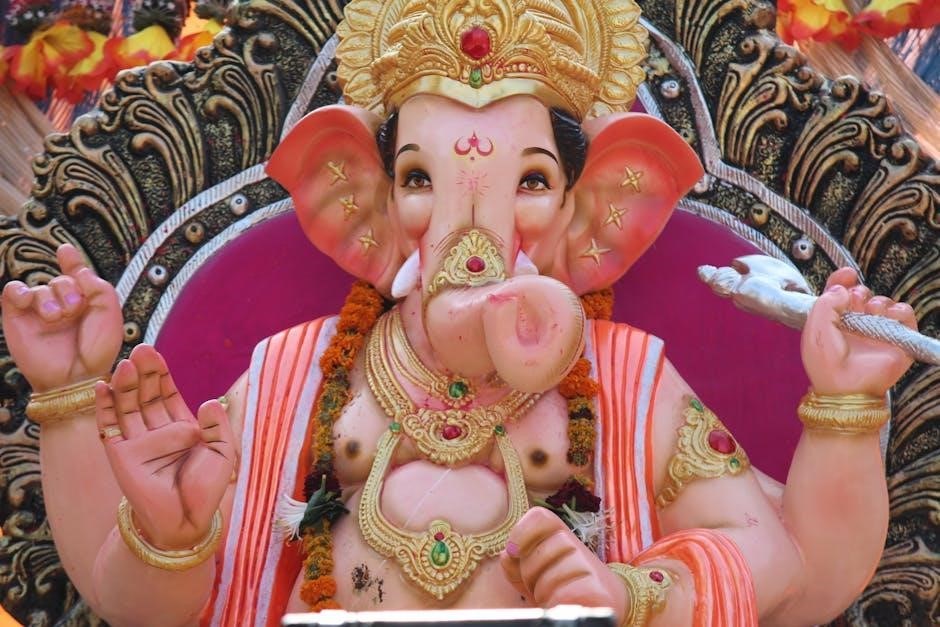
Vinayaka Chavithi, also known as Ganesh Chaturthi, is a highly revered Hindu festival celebrating the birth of Lord Ganesha. This ten-day extravaganza, primarily observed in Maharashtra, Andhra Pradesh, Telangana, Karnataka, and Goa, is a vibrant display of devotion and cultural richness. The festival centers around the installation of clay Ganesha idols in homes and public spaces, followed by elaborate puja (worship) rituals, devotional songs, and communal feasts.
Central to the celebrations are the Vinayaka Kathas – the stories and legends surrounding Lord Ganesha’s birth and adventures. These narratives, often found in PDF format for easy access and dissemination, are recited and shared during the festival, reinforcing the deity’s significance and moral teachings. Many downloadable resources compile these tales, offering variations from the Puranas, folklore, and regional traditions.
The availability of Vinayaka Chavithi Katha PDFs allows devotees to delve deeper into the mythology, understand the symbolism associated with Ganesha, and connect with the spiritual essence of the festival. These digital resources ensure the preservation and accessibility of these cherished stories for generations to come, fostering a continued appreciation for this important Hindu tradition.
The Significance of Lord Ganesha
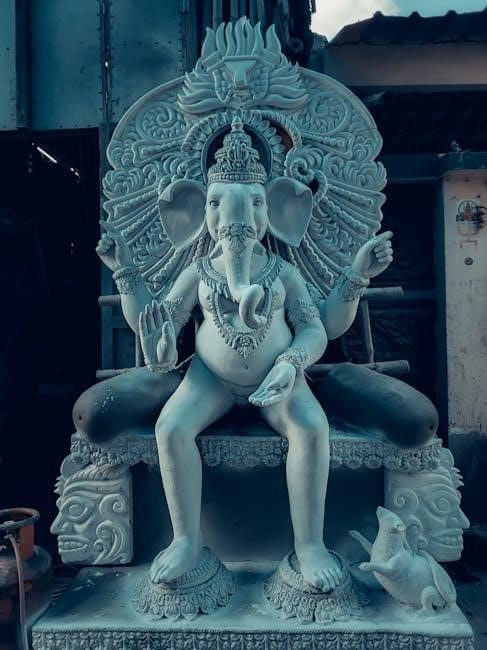
Lord Ganesha, widely worshipped as the remover of obstacles and the god of new beginnings, holds immense significance in Hinduism. His elephant head symbolizes wisdom, intellect, and discrimination, while his large ears represent attentive listening. Devotees believe that invoking Ganesha before any undertaking ensures success and prosperity. He is also revered as the deity of arts and sciences, intellect and education.
Understanding Ganesha’s significance is often deepened through the Vinayaka Kathas – the stories detailing his birth, adventures, and divine attributes. Numerous PDF resources compile these narratives, offering insights into his multifaceted character and role in Hindu cosmology. These readily available digital texts allow devotees to explore the symbolism embedded within each tale.
The Vinayaka Chavithi Katha PDFs often highlight Ganesha’s role as a guide towards righteousness, as described in the Bhavishya Purana. They emphasize his compassionate nature and his willingness to help those who seek his blessings. Accessing these stories digitally ensures their preservation and allows for wider dissemination, fostering a deeper connection with this beloved deity and his profound teachings.
Alternative Names for Ganesha: Vinayaka and Others
Lord Ganesha is known by a multitude of names, each reflecting a different aspect of his divine personality and powers. Vinayaka, meaning “the one who removes obstacles,” is perhaps the most prominent alternative, frequently used in the Vinayaka Chavithi celebrations and associated narratives. Other common names include Ganapati, Bappa, and Ekadantaya. These diverse appellations highlight the multifaceted nature of this beloved deity.
Exploring these alternative names often requires delving into the rich tapestry of Hindu mythology, conveniently accessible through Vinayaka Chavithi Katha PDF resources. These digital texts frequently explain the etymology and significance of each name, providing a deeper understanding of Ganesha’s attributes. They reveal how ‘Vinayaka’ specifically emphasizes his role in clearing paths to success.
Many PDF compilations of the Vinayaka Katha also showcase how the name ‘Ganesha’ itself is derived from the ‘Ganas’ – Shiva’s attendants – whom he leads. These resources offer a comprehensive overview, demonstrating the interconnectedness of Ganesha’s various names and their relevance to his divine functions, enriching the devotee’s understanding and appreciation.
The Origins of the Name “Vinayaka”
The name “Vinayaka”, deeply intertwined with the worship of Lord Ganesha, originates from the Sanskrit root ‘Vinayaka’, meaning “leader of the ganas.” The ‘ganas’ were Shiva’s celestial attendants, and Ganesha’s role as their leader signifies his authority and power. This etymological root directly links to his function as the remover of obstacles – by leading the ‘ganas’, he controls forces that might hinder progress.
Numerous Vinayaka Chavithi Katha PDF documents detail this origin story, often elaborating on how Ganesha earned this title through his wisdom and strategic prowess. These resources explain that ‘Vinayaka’ isn’t merely a name, but a descriptor of his inherent capabilities. They often present narratives illustrating Ganesha skillfully managing the ‘ganas’ and resolving conflicts.
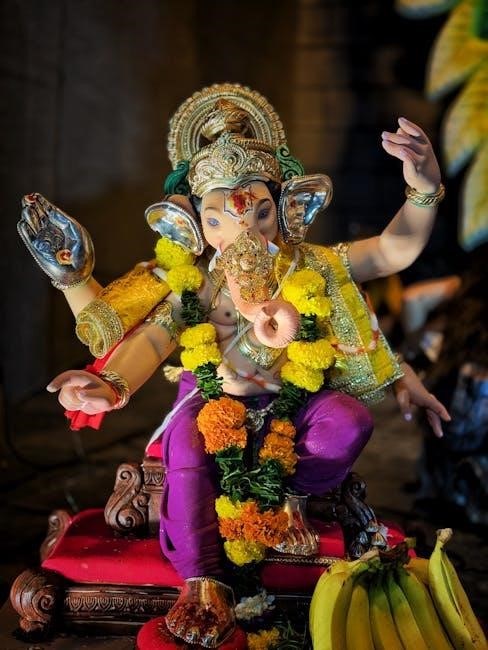
Further exploration within these PDF texts reveals that the name also implies a mastery over one’s own ego and desires – ‘Vinayaka’ suggests humility and self-control. Understanding the origins of the name, as presented in these readily available resources, provides a richer appreciation for the symbolism embedded within the worship of Lord Ganesha during Vinayaka Chavithi.
Vinayaka in Puranas and Buddhist Tantras
Vinayaka’s presence extends beyond Hindu Puranas, appearing significantly within Buddhist Tantras, showcasing a fascinating cross-cultural influence. While depictions differ, the core concept of an obstacle-removing deity remains consistent. Puranic literature details Ganesha’s birth stories and exploits, solidifying his role as Shiva and Parvati’s son. Conversely, Buddhist Tantras portray Vinayaka as a powerful protector, often associated with esoteric practices.
Numerous Vinayaka Chavithi Katha PDF resources explore these dual representations, comparing and contrasting the narratives. These documents highlight how the deity adapted to different theological frameworks, retaining core attributes while acquiring new layers of symbolism. Some PDF texts suggest a possible exchange of ideas between Hinduism and Buddhism, influencing the evolution of Vinayaka’s iconography;
Analyzing these PDF materials reveals that the Buddhist Vinayaka often embodies fierce energy, contrasting with the more benevolent Ganesha commonly depicted in Puranas. This duality underscores the multifaceted nature of the deity, demonstrating his adaptability and enduring relevance across diverse spiritual traditions during Vinayaka Chavithi celebrations.
The Ashtavinayak Temples in Maharashtra
Maharashtra’s eight revered Ashtavinayak temples are central to the Vinayaka tradition, each enshrining a unique form of Ganesha with its own compelling legend. These temples are pilgrimage sites, particularly vibrant during Vinayaka Chavithi, attracting devotees seeking blessings and spiritual fulfillment. The names themselves – Ashtavinayak – directly reflect the deity’s common name, Vinayaka.
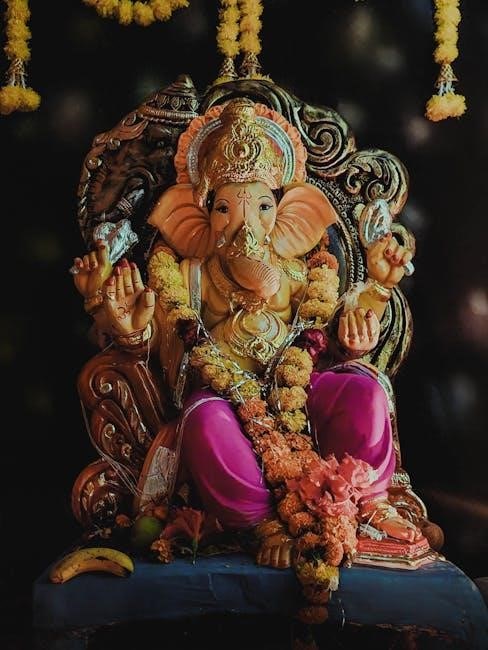
Many Vinayaka Chavithi Katha PDF resources dedicate sections to detailing the history and significance of each temple. These PDF documents often include specific stories associated with each Vinayaka, explaining how the deity manifested in that location and the miracles performed. They provide detailed travel guides and ritualistic information for pilgrims.
Exploring these PDF materials reveals that the legends surrounding the Ashtavinayak temples often intertwine with broader Puranic narratives, enriching the understanding of Ganesha’s role in cosmic events. The PDFs also highlight the architectural and artistic nuances of each temple, showcasing the rich cultural heritage of Maharashtra during the Vinayaka Chavithi festival and beyond. They are invaluable resources for devotees and researchers alike.
Vinayaka as the Remover of Obstacles
Central to the worship of Vinayaka, and prominently featured in Vinayaka Chavithi Katha PDF resources, is his role as the remover of obstacles – Vighnaharta. These PDF documents consistently emphasize that invoking Ganesha before any undertaking ensures success and smooth progress. Stories within these texts illustrate instances where Ganesha skillfully navigated challenges for devotees, demonstrating his power to overcome adversity.
Many PDF versions of the Vinayaka Katha detail how Ganesha’s own birth story exemplifies this quality; he removed obstacles even from his mother, Parvati’s, path. The PDFs often include specific mantras and prayers dedicated to Ganesha as the obstacle remover, intended for recitation during Vinayaka Chavithi celebrations and daily life.
Furthermore, the Vinayaka Chavithi Katha PDF materials explain that the obstacles Ganesha removes aren’t merely external; they also encompass internal impediments like ego, doubt, and negative thoughts. This multifaceted interpretation reinforces his significance as a guide on the spiritual path, helping devotees achieve self-realization. These resources provide a comprehensive understanding of this vital aspect of Vinayaka’s character.
Lord Ganesha’s Parentage: Shiva and Parvati
Vinayaka Chavithi Katha PDF resources universally depict Lord Ganesha as the divine offspring of Lord Shiva and Goddess Parvati, a foundational element of his mythology. These PDF documents detail various accounts of his birth, often centering around Parvati creating Ganesha from sandalwood paste or turmeric to guard her privacy.
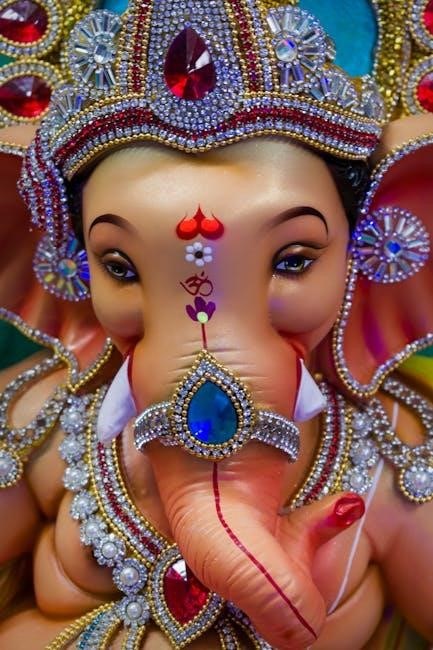
The PDF narratives frequently explain the circumstances leading to Ganesha’s elephant head – Shiva’s reaction to Ganesha preventing his entry, resulting in a divine intervention and the substitution of Ganesha’s head. These stories, readily available in Vinayaka Chavithi Katha PDF formats, emphasize the unique and miraculous nature of his creation.
Moreover, the PDFs highlight the complementary roles of Shiva and Parvati in Ganesha’s character; Shiva represents renunciation and wisdom, while Parvati embodies nurturing and earthly power. This duality is reflected in Ganesha’s multifaceted personality. The Vinayaka Chavithi Katha PDF materials consistently portray their parental bond as a source of Ganesha’s strength and divine authority, solidifying his place in Hindu cosmology.
Lord Ganesha’s Role in Daily Life and Rituals
Vinayaka Chavithi Katha PDF materials extensively illustrate Lord Ganesha’s pervasive role in Hindu daily life and rituals. These PDF resources emphasize that Ganesha is invoked at the beginning of any auspicious undertaking, symbolizing the removal of obstacles and ensuring success. The PDFs detail how devotees pray to him before starting new ventures, journeys, or ceremonies.
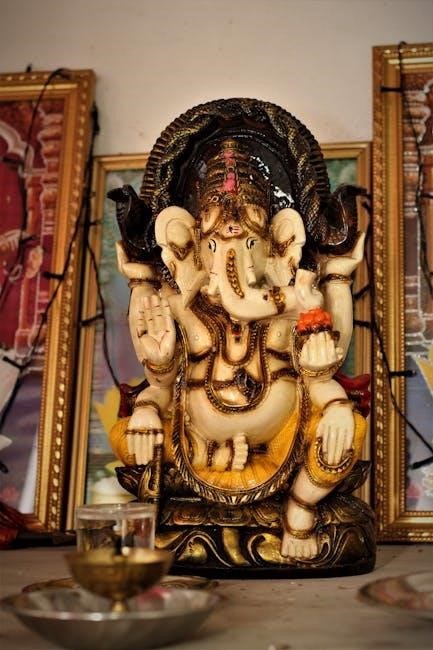
Furthermore, the Vinayaka Chavithi Katha PDF documents showcase Ganesha’s importance in household shrines and temples, where daily prayers and offerings are common. They explain the significance of puja (worship) rituals, including the offering of modak (sweet dumplings), his favorite treat. These PDFs often include detailed instructions for performing these rituals correctly;
The PDFs also highlight Ganesha’s association with education, arts, and sciences, making him a patron deity for students and scholars. They demonstrate how his blessings are sought for intellectual pursuits. Ultimately, the Vinayaka Chavithi Katha PDF resources portray Ganesha as an integral part of the Hindu faith, deeply woven into the fabric of everyday life and spiritual practice;
Vinayaka and the Path of Righteousness (Bhavishya Purana)
Vinayaka Chavithi Katha PDF documents frequently cite the Bhavishya Purana, emphasizing Lord Ganesha’s role as a guide towards righteousness. These PDF resources explain that, according to the Purana, Ganesha actively leads noble individuals onto the path of dharma (righteousness), earning him the title “Vinayaka” – the one who guides.
The PDFs detail how Ganesha’s blessings are believed to instill moral strength and ethical conduct in devotees. Stories within the Vinayaka Chavithi Katha PDF narratives often depict Ganesha testing individuals’ integrity and rewarding those who demonstrate unwavering adherence to righteous principles. These tales serve as moral lessons, reinforcing the importance of ethical behavior.
Furthermore, the PDF materials illustrate how Ganesha’s worship is seen as a means of purifying the mind and fostering a sense of devotion, essential components of a righteous life. The Vinayaka Chavithi Katha PDF consistently portrays Ganesha not merely as an obstacle remover, but as a divine mentor steering devotees towards a virtuous and fulfilling existence, aligned with the principles of the Bhavishya Purana.
The Multifaceted Nature of Vinayaka’s Character
Vinayaka Chavithi Katha PDF collections reveal a remarkably complex portrayal of Lord Ganesha, extending far beyond his popular image as the remover of obstacles. These PDF resources demonstrate that Vinayaka embodies a spectrum of human experiences, representing both earthly pleasures and profound spiritual devotion.
The PDF narratives showcase Ganesha’s playful side, his appreciation for simple joys, and his capacity for compassion. Simultaneously, they highlight his role as a symbol of sacrifice and unwavering dedication, particularly in stories detailing his devotion to his parents, Shiva and Parvati. Examining these Vinayaka Chavithi Katha PDF texts reveals a deity who is relatable and deeply human.
Furthermore, the PDF materials emphasize that Ganesha’s multifaceted nature allows devotees to connect with him on multiple levels. Whether seeking worldly success or spiritual enlightenment, individuals find resonance in his diverse attributes. The Vinayaka Chavithi Katha PDF consistently portrays a deity whose character is rich, nuanced, and profoundly meaningful, reflecting the complexities of the human condition.
The Vināyakas: Troublesome Demons in Mythology
Vinayaka Chavithi Katha PDF documents surprisingly reveal an earlier mythology surrounding the “Vināyakas” – not as benevolent deities, but as troublesome demons. These PDF resources detail how these four beings actively created obstacles and difficulties for individuals in ancient Hindu narratives.
Interestingly, the PDF texts explain that these Vināyakas were not inherently malicious, but rather easily propitiated. Simple offerings and prayers could appease them, removing the hurdles they presented. This contrasts sharply with the later, more prominent image of Ganesha as the obstacle remover.
Scholarly analysis within some Vinayaka Chavithi Katha PDF collections proposes a fascinating theory: the rise of Ganesha may be connected to these earlier Vināyakas. It suggests Ganesha gradually absorbed the characteristics and role of these troublesome entities, transforming from an obstacle creator to an obstacle remover. Exploring these PDF materials provides a unique perspective on the evolution of Ganesha’s mythology, showcasing a lesser-known, yet significant, aspect of his origins.
Theories on Ganesha’s Rise to Prominence
Vinayaka Chavithi Katha PDF resources offer intriguing insights into the theories surrounding Lord Ganesha’s ascent to prominence within the Hindu pantheon. Many PDF documents detail the connection to the earlier Vināyakas – troublesome demons – suggesting Ganesha absorbed their characteristics, evolving from an obstacle creator to remover.
Several PDF analyses propose that Ganesha’s popularity grew through association with various local deities and traditions. These texts highlight how regional beliefs were integrated, contributing to his widespread acceptance. The PDF materials also suggest a deliberate effort by certain priestly groups to elevate Ganesha’s status.
Furthermore, some Vinayaka Chavithi Katha PDF collections point to the deity’s adaptable nature as a key factor. Ganesha’s multifaceted character – representing wisdom, prosperity, and devotion – resonated with diverse populations. The accessibility of his worship, requiring minimal ritual complexity, also contributed to his broad appeal. Examining these PDF sources reveals a complex interplay of factors driving Ganesha’s remarkable rise to become one of Hinduism’s most beloved and widely worshipped deities.
Vinayaka and the Medara Clan
Vinayaka Chavithi Katha PDF documents reveal a fascinating connection between the deity and the Medara clan, a community of bamboo workers found across Telugu, Canarese, Oriya, and Tamil regions. These PDF resources detail the Medara people’s belief in their origins stemming from Mahendrachala mountain, the abode of Indra, and their association with Vinayaka (Ganesha).
The PDF texts explain that ‘Vinayaka’ functions as a gotra – a clan name – amongst the Medaras, signifying a lineage and ancestral connection to the deity. This association isn’t merely symbolic; it’s deeply embedded in their cultural identity and traditions. Several PDF collections showcase oral histories and folklore passed down through generations.
Further exploration within these Vinayaka Chavithi Katha PDF materials suggests the Medara clan’s reverence for Vinayaka likely predates his widespread pan-Indian worship. The PDF sources propose that their localized devotion contributed to the broader acceptance and integration of Ganesha into the larger Hindu framework. Studying these PDF accounts offers a unique perspective on the deity’s regional roots and the role of specific communities in shaping his veneration.
The Legend of Gaja Sarada (Telugu Folklore)
Vinayaka Chavithi Katha PDF collections frequently include the captivating Telugu folklore surrounding Gaja Sarada, a demoness with an elephantine form. These PDF resources detail a narrative where Gaja Sarada terrorized people, and her defeat is intrinsically linked to Lord Vinayaka’s power and intervention. The story, preserved in various PDF formats, highlights Vinayaka’s role as a protector and vanquisher of evil.
According to the PDF accounts, Gaja Sarada possessed immense strength and wreaked havoc until Vinayaka confronted her. The PDF texts describe a fierce battle, ultimately won by Vinayaka through his wisdom and divine abilities. This legend, readily available in Vinayaka Chavithi Katha PDF downloads, serves as a potent symbol of overcoming obstacles and the triumph of good over darkness.
Analyzing these PDF versions reveals regional variations in the tale, showcasing the dynamic nature of folklore. Some PDF sources emphasize Gaja Sarada’s initial devotion to Shiva, later corrupted, while others focus solely on her malevolent actions. These PDF materials demonstrate how local narratives enrich the broader understanding of Vinayaka’s mythology and his significance within Telugu culture.
PDF Resources for Vinayaka Chavithi Kathas
Vinayaka Chavithi Katha PDF documents are readily accessible online, offering a wealth of information about the festival and its associated stories. Numerous websites host downloadable PDF versions of the traditional narratives, catering to diverse linguistic preferences and regional variations. These PDF resources often include detailed accounts of Lord Ganesha’s birth, his adventures, and the significance of the celebrations.
Searching for “Vinayaka Chavithi Katha PDF” yields results from various religious organizations and cultural institutions. Many PDF files contain illustrated versions of the katha, making them particularly engaging for children. Others provide scholarly analyses of the mythology, exploring the symbolism and philosophical underpinnings of the stories. These PDF documents are invaluable for those seeking a deeper understanding of the festival.
Furthermore, specialized PDF collections focus on specific aspects, such as the Ashtavinayak pilgrimage or regional traditions. These downloadable resources often include prayers, rituals, and guidelines for observing Vinayaka Chavithi. Accessing these Vinayaka Chavithi Katha PDF materials allows devotees to connect with the festival’s rich heritage and deepen their spiritual practice.
Exploring Different Versions of the Vinayaka Katha
Vinayaka Chavithi Katha PDF collections reveal a fascinating diversity in the narratives surrounding Lord Ganesha. While the core story remains consistent – Ganesha’s birth and his role as the remover of obstacles – regional variations and textual interpretations lead to nuanced differences. Examining multiple PDF versions highlights these subtle shifts in emphasis and detail.
Some PDF documents emphasize Ganesha’s playful nature and earthly delights, while others focus on his asceticism and devotion to his parents, Shiva and Parvati. The Bhavishya Purana’s portrayal of Ganesha guiding righteous individuals is often prominent in these PDF accounts. Telugu folklore, as exemplified by the Gaja Sarada legend, introduces unique elements not found in mainstream narratives, accessible through specific PDF resources.
Comparing these different versions, often available as downloadable PDF files, demonstrates the dynamic nature of mythology and its adaptation across cultures. The Vinayaka Chavithi Katha PDF format allows for easy side-by-side comparison, fostering a deeper appreciation for the multifaceted character of Vinayaka and the richness of his associated stories. These variations enrich the devotional experience.
The Cultural Importance of Vinayaka Chavithi Celebrations
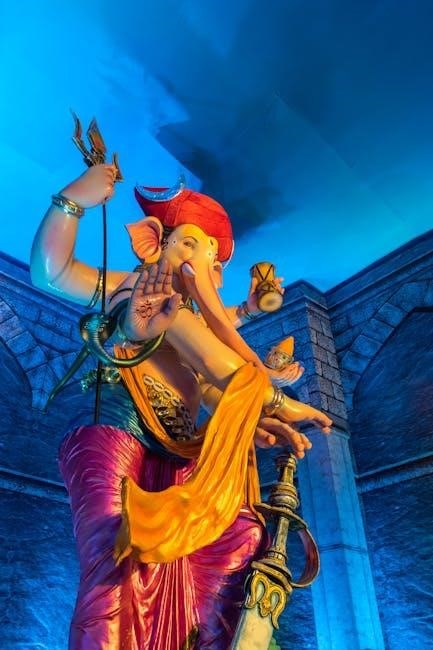
Vinayaka Chavithi is profoundly embedded in Hindu culture, representing a time for devotion, community, and artistic expression. The festival’s significance extends beyond religious observance, fostering social cohesion and cultural transmission. Accessing the Vinayaka Chavithi Katha in PDF format enhances understanding of the festival’s underlying narratives and traditions.
The celebration’s widespread popularity, particularly in Maharashtra with the Ashtavinayak pilgrimage, demonstrates its deep cultural roots. The PDF versions of the Katha often include details about rituals, prayers, and the symbolism associated with the festival, aiding in its proper observance. The stories reinforce the importance of righteousness, as highlighted in the Bhavishya Purana, and Ganesha’s role as a benevolent guide.
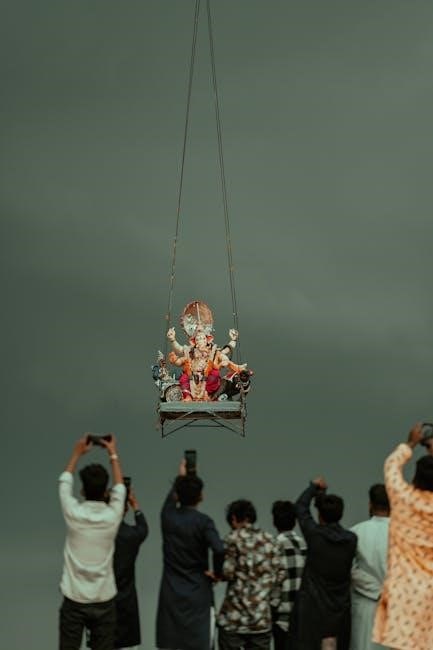
Furthermore, the festival encourages artistic endeavors – crafting idols, decorating homes, and preparing festive foods. Vinayaka Chavithi Katha PDF resources often showcase these artistic traditions, preserving and promoting cultural heritage. The festival serves as a vibrant reminder of Hindu values and the enduring legacy of Lord Ganesha, readily accessible through digital PDF documentation.